Leading Titanium Forging Companies

Titanium is naturally a high strength, low-density element with excellent corrosion resistance. It is quite ductile and hard, has a high melting point, and has relatively low electrical and thermal conductivity. Read More…

Titanium Forgings Titanium forgings are the product of a metallurgical process in which titanium is given a particular shape by the application of a strong compressive force. The pressure applied during the metal forging process shapes the titanium and also causes plastic deformation in the grain structure of the metal, so that the grain flow follows the shape of the piece. Thus, forging is both an efficient way of forming titanium as well as a way to improve its directional strength.

Although we have over 100 years of experience, we are committed to continually expanding our offerings in all industries. We are not content to remain as we are, but we continually work to improve our products and processes each and every day.
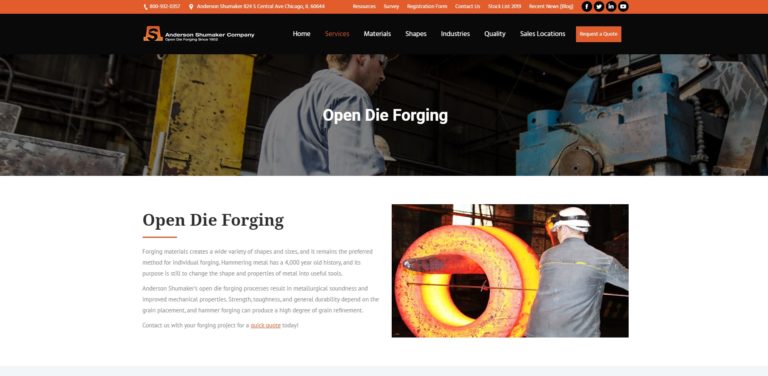
Anderson Shumaker Company $$$

DEECO Metals has been a leading supplier and manufacturer of quality forgings, aluminum forgings, alloy steel forgings and steel forgings since 1986. Our forging presses range from 45 tons to 1600 tons. Expect exceptional service and high-quality forgings at reasonable prices.
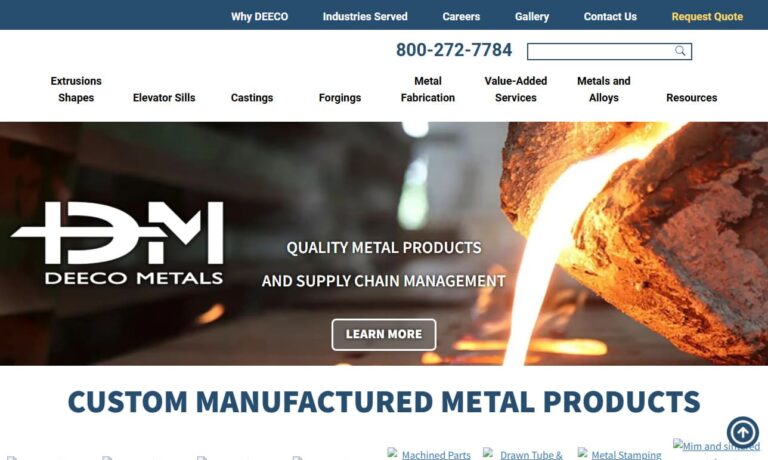
Deeco Metals Corporation $$$

From the first forging to the last, Walker Forge will match your exacting standards for superior consistency in die forging. Our satisfied customers will tell you that they receive the most reliable carbon alloy and stainless steel forgings – part-to-part and lot-to-lot – in medium to high-volume applications. Want to increase your products’ performance and boost productivity, choose Walker ...
Walker Forge, Inc. $$$

At W.E. Hoban, we take pride in being a trusted name in the forging industry, delivering strength, reliability, and precision in every product we manufacture. Our expertise lies in producing high-quality forgings that meet the demanding requirements of industries ranging from heavy machinery and transportation to energy and defense.

W.E. Hoban $$$
Get Your Company Listed
placeholder image Anderson Shumaker Company Deeco Metals Corporation Walker Forge, Inc. W.E. Hoban

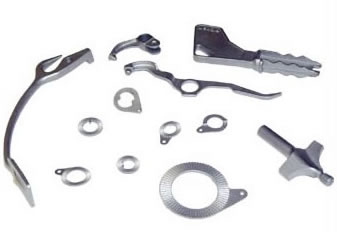
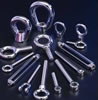
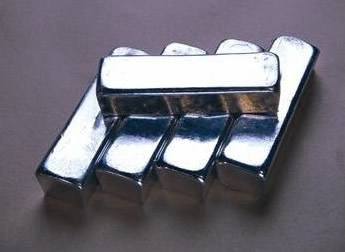
Titanium forgings produce strong, low-density parts similar to carbon steel forging or stainless steel forgings, but about 40% lighter. Titanium forgings offer high resistance to corrosion by salt water, along with a broad range of acids, alkalis, natural waters and industrial chemicals. Titanium forgings come in a variety of shapes, such as rings, cylinders, bars, blocks, discs, sleeves, hubs, flanges, as well as any number of more complex custom shapes for particular applications. Titanium forgings work effectively in environments reaching up to 1000 degrees Fahrenheit.

Because of their excellent strength-to-weight ratio, titanium alloy forgings are used in applications such as engine components and structural components for aircraft, ship components, and valves and fittings for the transportation and chemical industries, where corrosion resistance, optimal strength and low weight are needed.

The titanium forging process gives the metal a sophisticated structure that enhances its strength. Most often titanium forgings are created by heating a preformed piece of titanium or titanium alloy and then using a large forging hammer or press that forces the workpiece to take the shape of the die(s). Unlike in casting, the metal is not melted or poured; instead the forging process uses intense pressure to cause the metal to flow into the desired shape.

The process often proceeds gradually through numerous strikes, requiring an operator to move the workpiece through a series of impression cavities. A variety of equipment can be used to forge titanium. Drop forge equipment utilizes a massive drop-hammer that falls from above on the workpiece as it lies on a stationary anvil. In counterblow machines, both the hammer and the anvil move horizontally to impact the workpiece that is held between them.

Forging presses use mechanical or hydraulic force to apply continuous pressure over the course of a number of seconds; the stroke time is much slower than in drop forging, but in most cases only requires one pressing per part. Whatever the particular forging method, titanium forgings make light-weight, high-integrity components capable of performing well even in harsh environments.
Titanium Forging Informational Video


Forging Power Pages

Aluminum Forging

Aluminum Forging

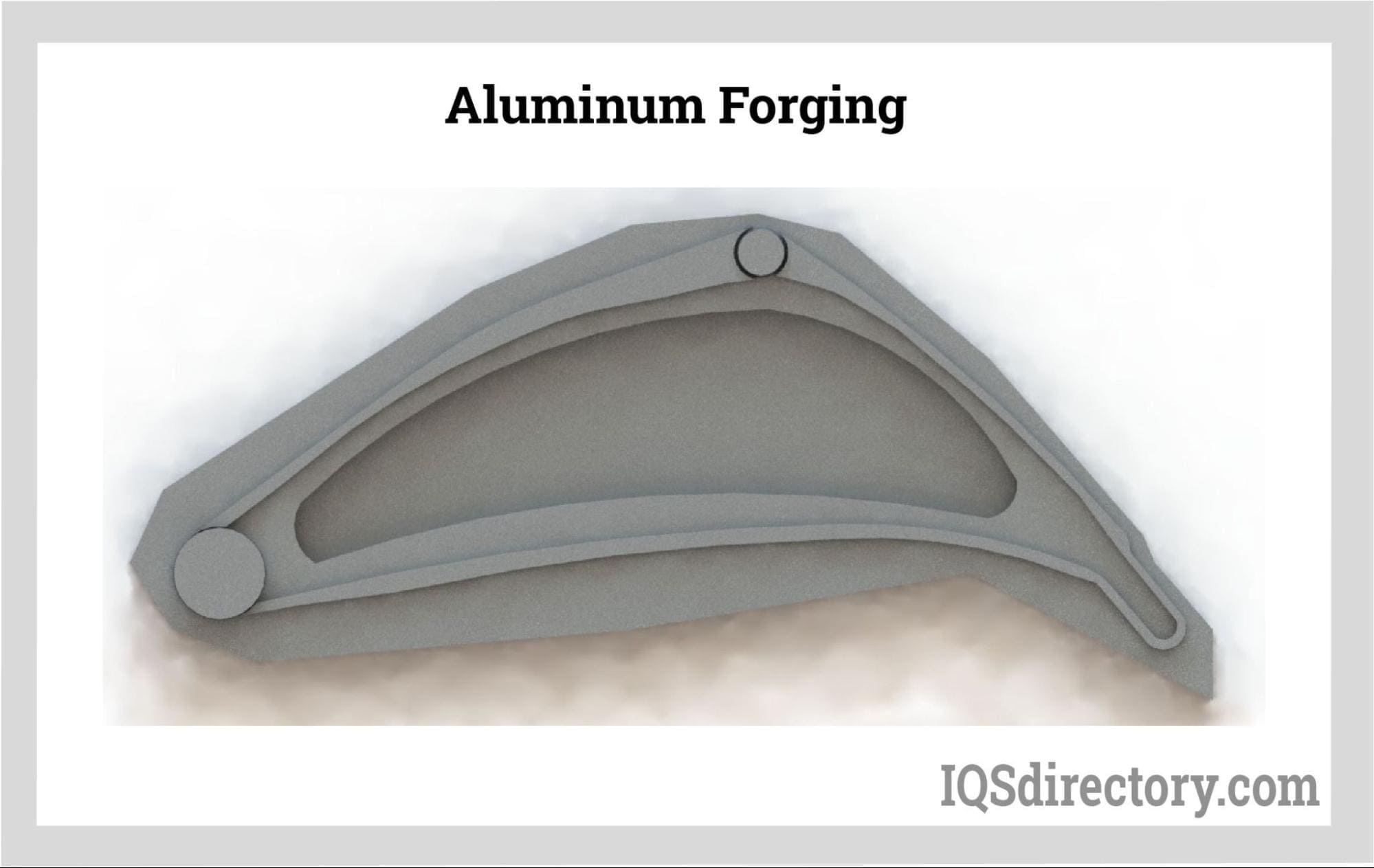
Aluminum forging is a method for processing aluminum alloys using pressure and heat to form high strength, durable products. The process of aluminum forging involves pressing, pounding, and squeezing an aluminum billet, workpiece, or cylinder under great pressure to create parts that have high strength…

Cold Forging

Cold Forging

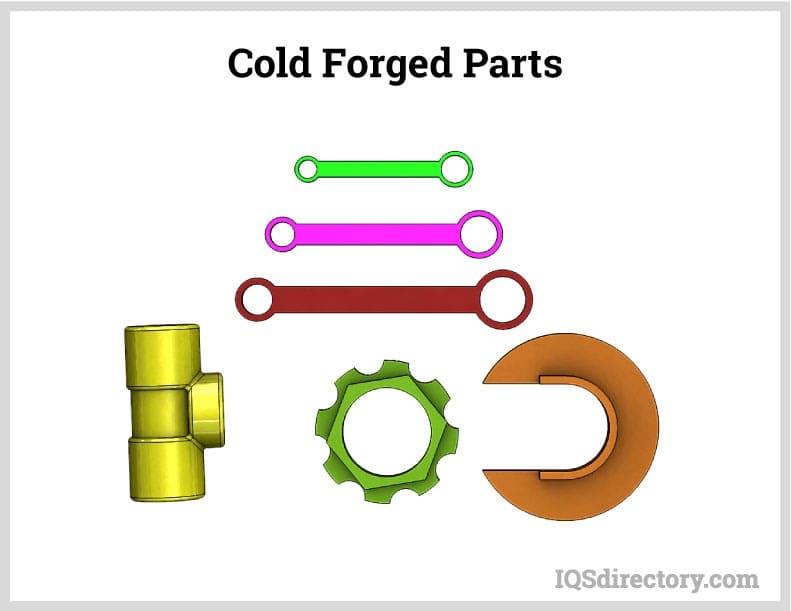
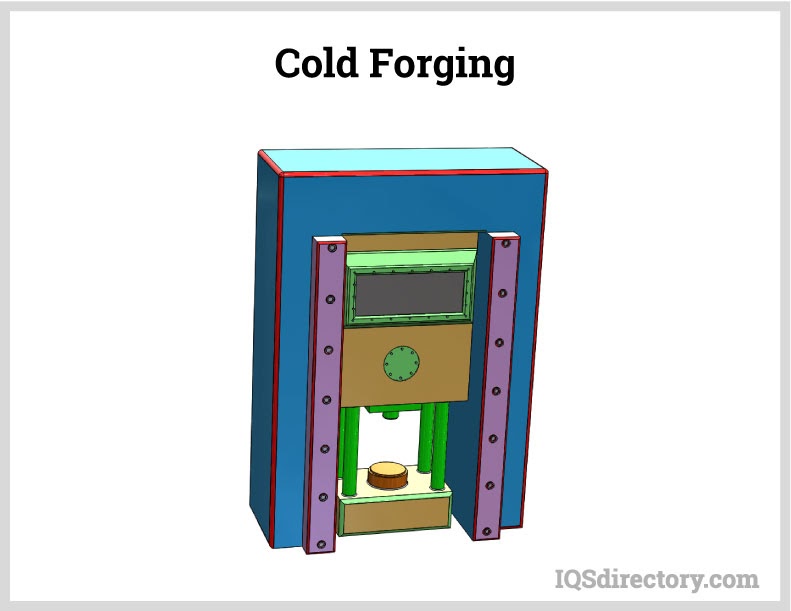
Cold forging is a metal shaping & manufacturing process in which bar stock is inserted into a die and squeezed into a second closed die. The process, completed is at room temperature or below the metal‘s recrystallization temperature to form a metal into a desired shape or configuration…

Copper & Brass Forging

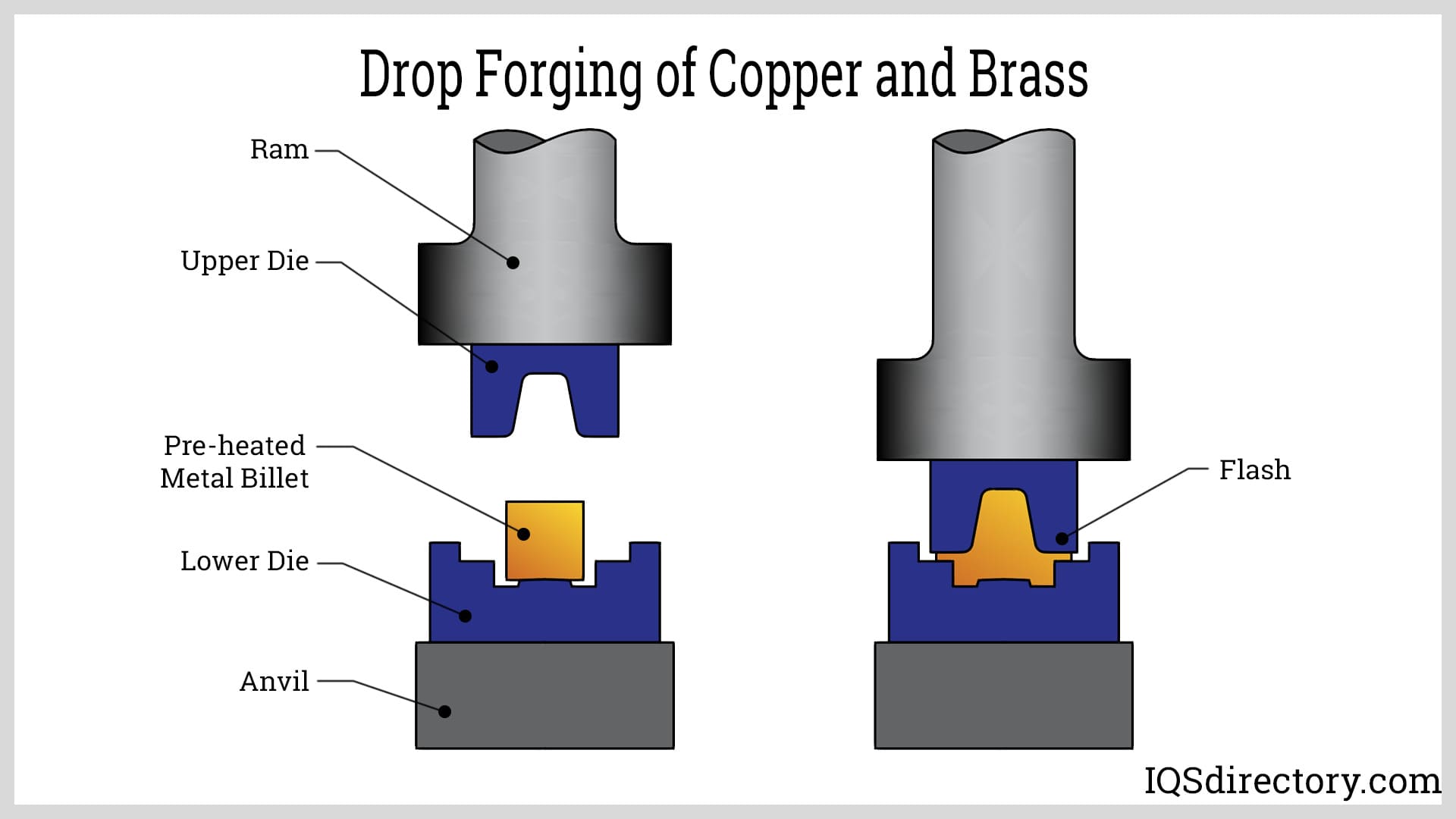
Drop Forging of Copper and Brass

Copper and brass forging is the deformation of copper and brass for the purpose of manufacturing complex and intricate shapes. The temperature at which copper and brass are forged is precision controlled and monitored due to their…

Drop Forging

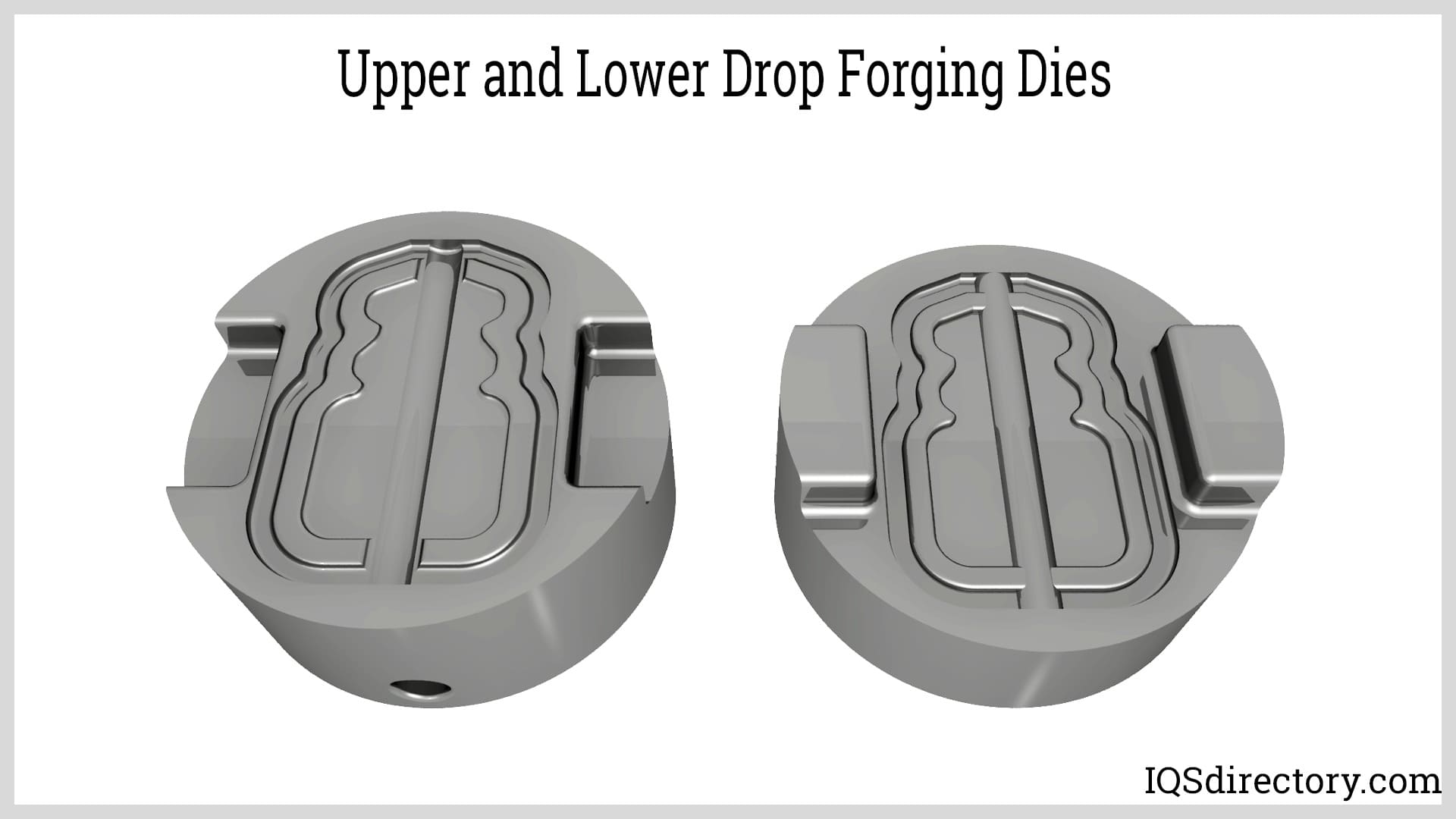
Upper and Lower Drop Forging Dies

Drop forging is a metal working process that shapes and forms a metal bar or billet placed between two dies. The metal piece is compressed, under great force, into the form and shape of the dies to produce a product or component…

Forging

Forging

Forging is a metal working process that manipulates, shapes, deforms, and compresses metal to achieve a desired form, configuration, or appearance outlined by a metal processing design or diagram…

Forging Steel

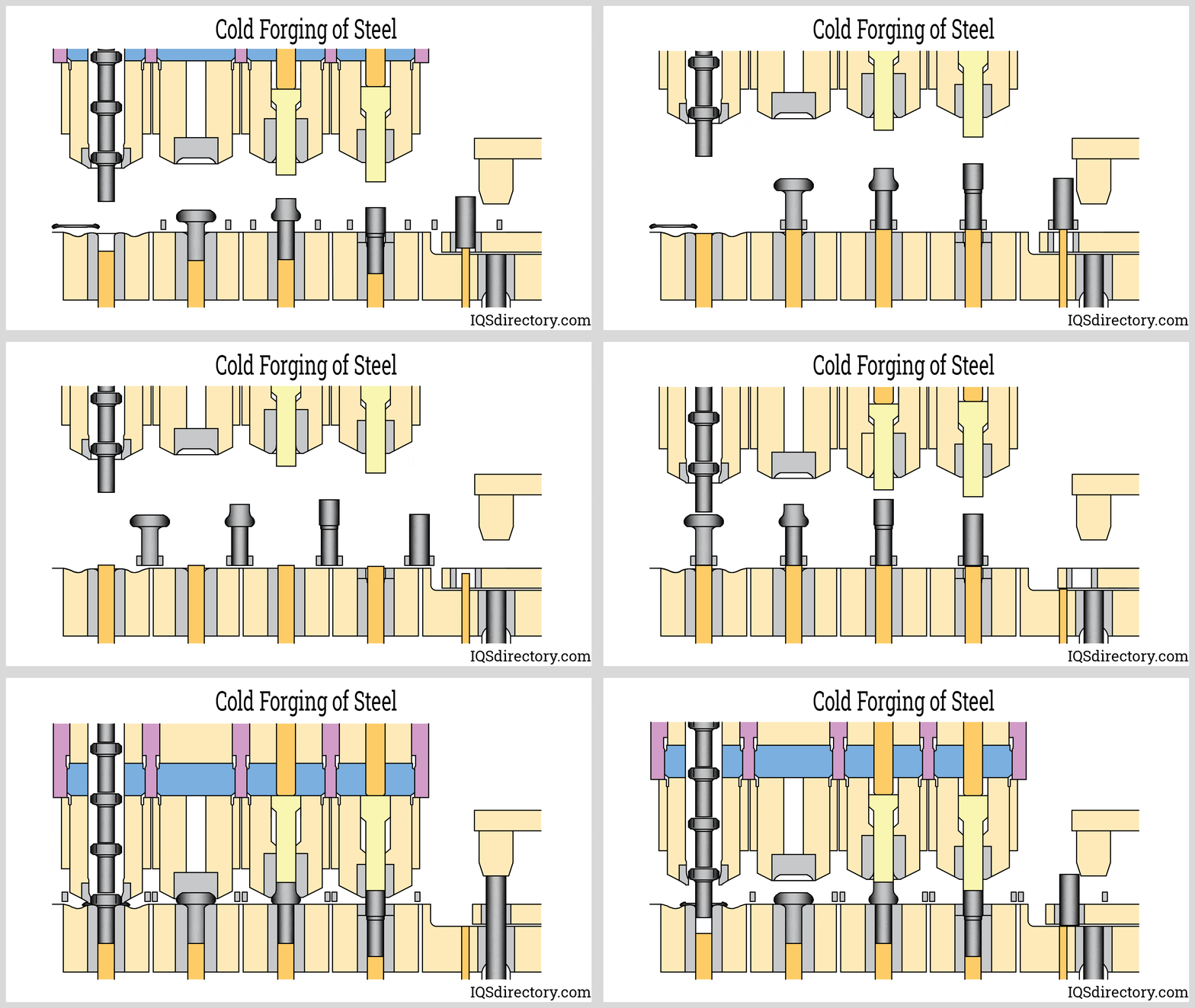
Cold Forging of Steel

Forging steel is a manufacturing process used to shape steel by using localized compressive forces, which include hammering, pressing, and rolling. It is a widely used method for producing high quality steel products with exceptional tolerances. The steel for forging is produced…

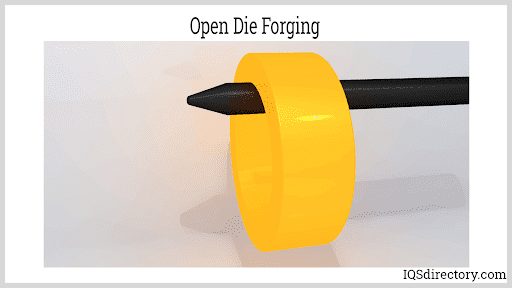
Open vs Closed Die Forging

Open vs Closed Die Forging

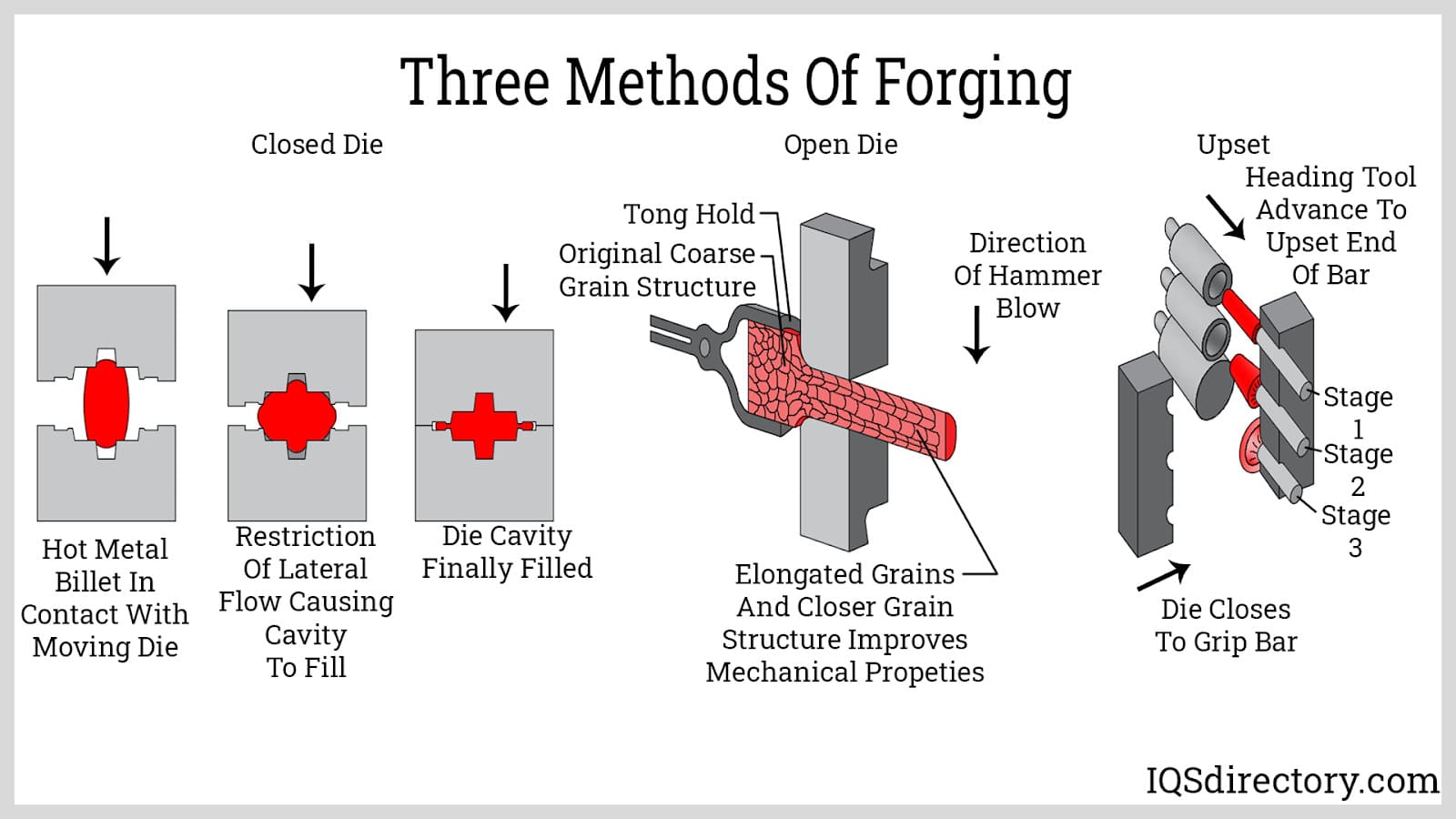
In this article, there are key terms that are typically used with open and closed die forging and it is necessary to understand their meaning. Forging is a process in manufacturing that involves pressing, hammering, or…

Rolled Ring Forging

Rolled Ring Forging

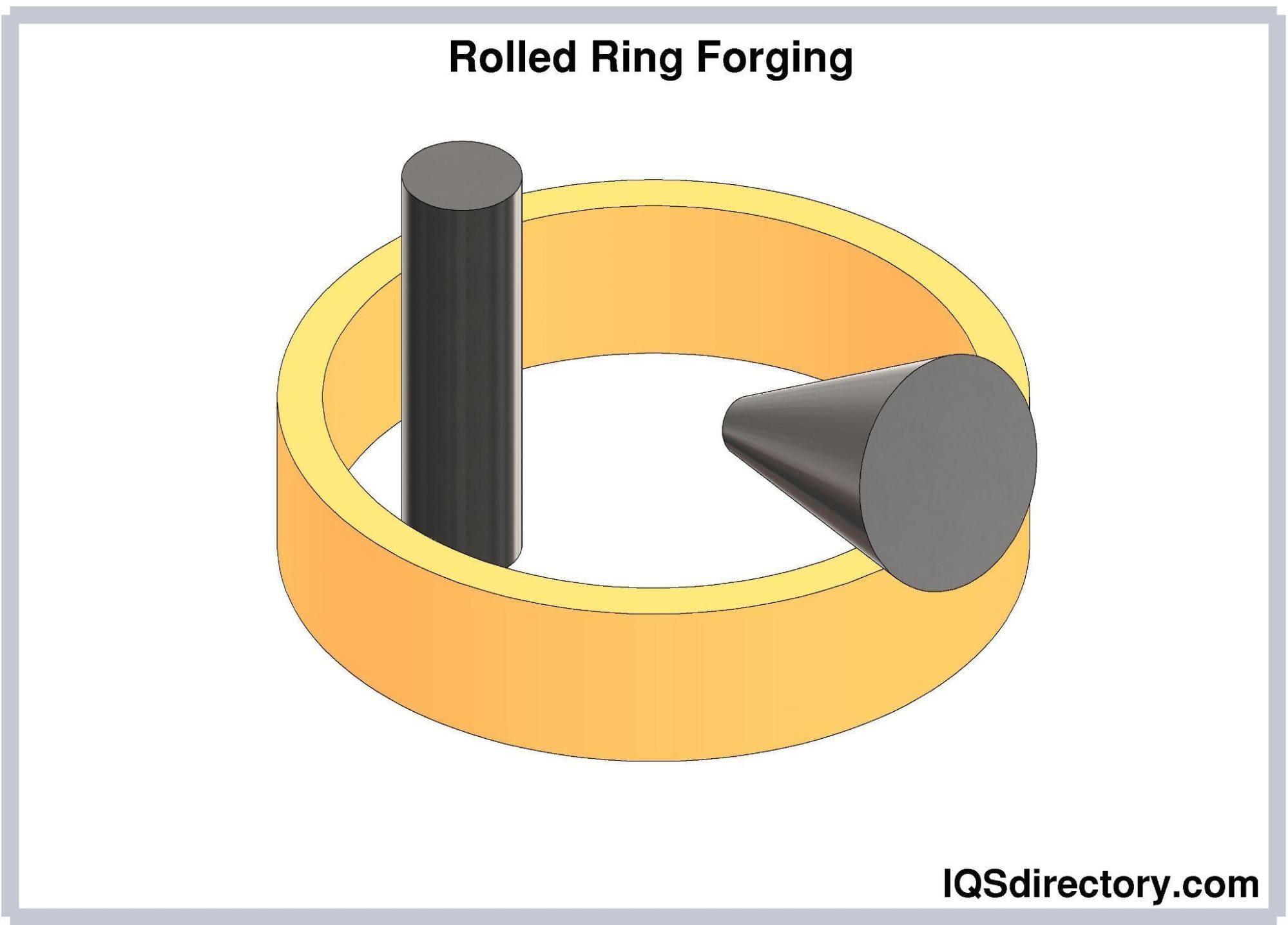
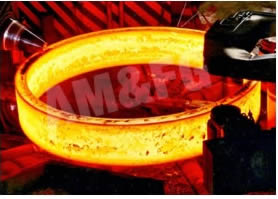
Rolled ring forging is a metal working process that involves punching a hole in a thick, solid, round metal piece to create a donut shape and then squeezing and pressuring the donut shape into a thin ring…

What is Forging?

What is Forging?

The ancient art of forging falls into two distinct categories – hot and cold where hot forging has been around for centuries while cold did not begin until the industrial revolution of the 19th Century. Though they are quite different …

Aluminum Casting

Aluminum Casting

Aluminum casting is a method for producing high tolerance and high quality parts by inserting molten aluminum into a precisely designed and precision engineered die, mold, or form. It is an efficient process for the production of complex, intricate, detailed parts that exactly match the specifications of the original design…

Types of Casting Processes

Casting Foundry

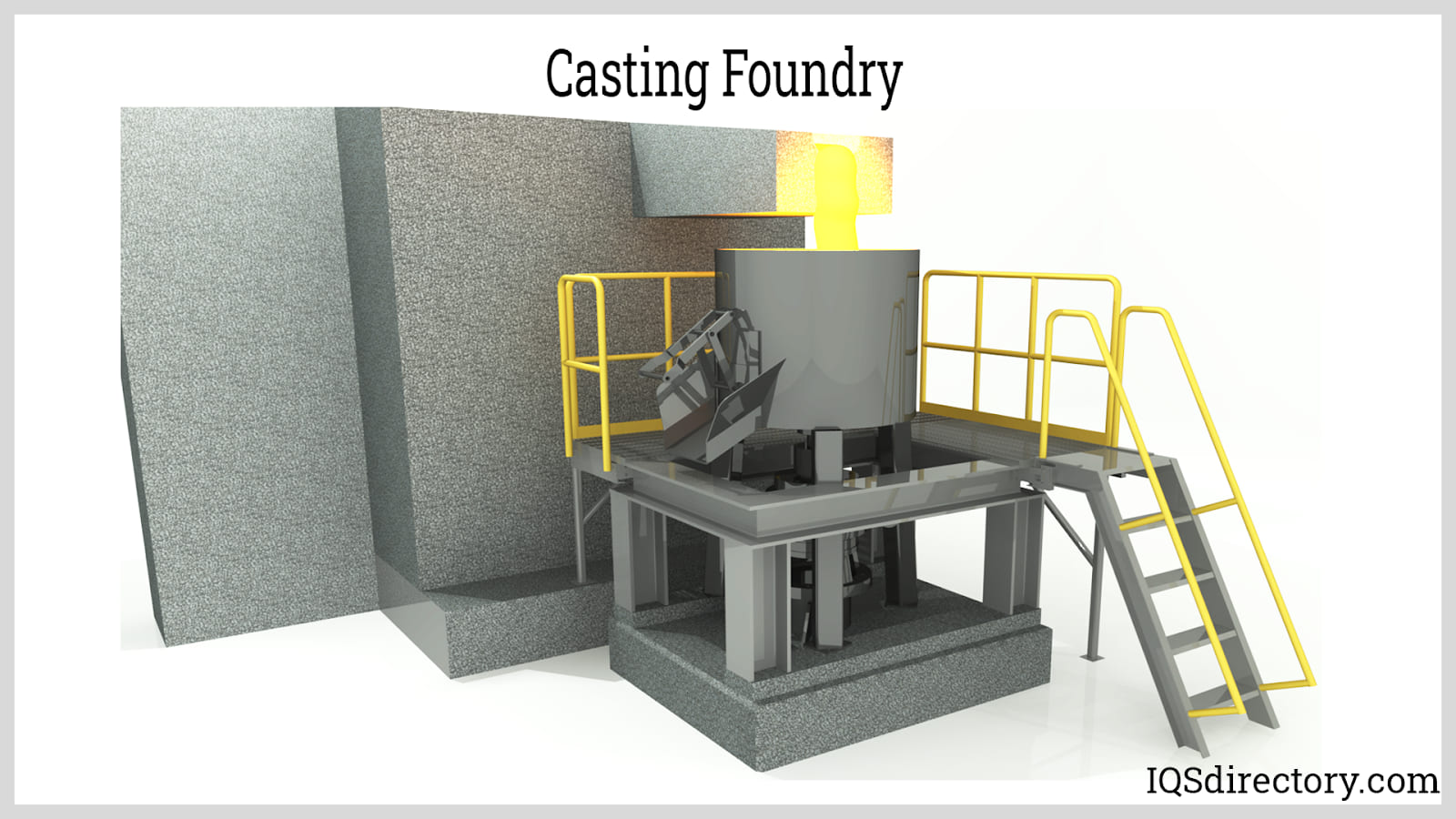
The casting process is an ancient art that goes back several thousand years to the beginning of written history. The archeological record has finds that document the use of the casting process over 6000 years ago around…

Sand Casting

Sand Casting

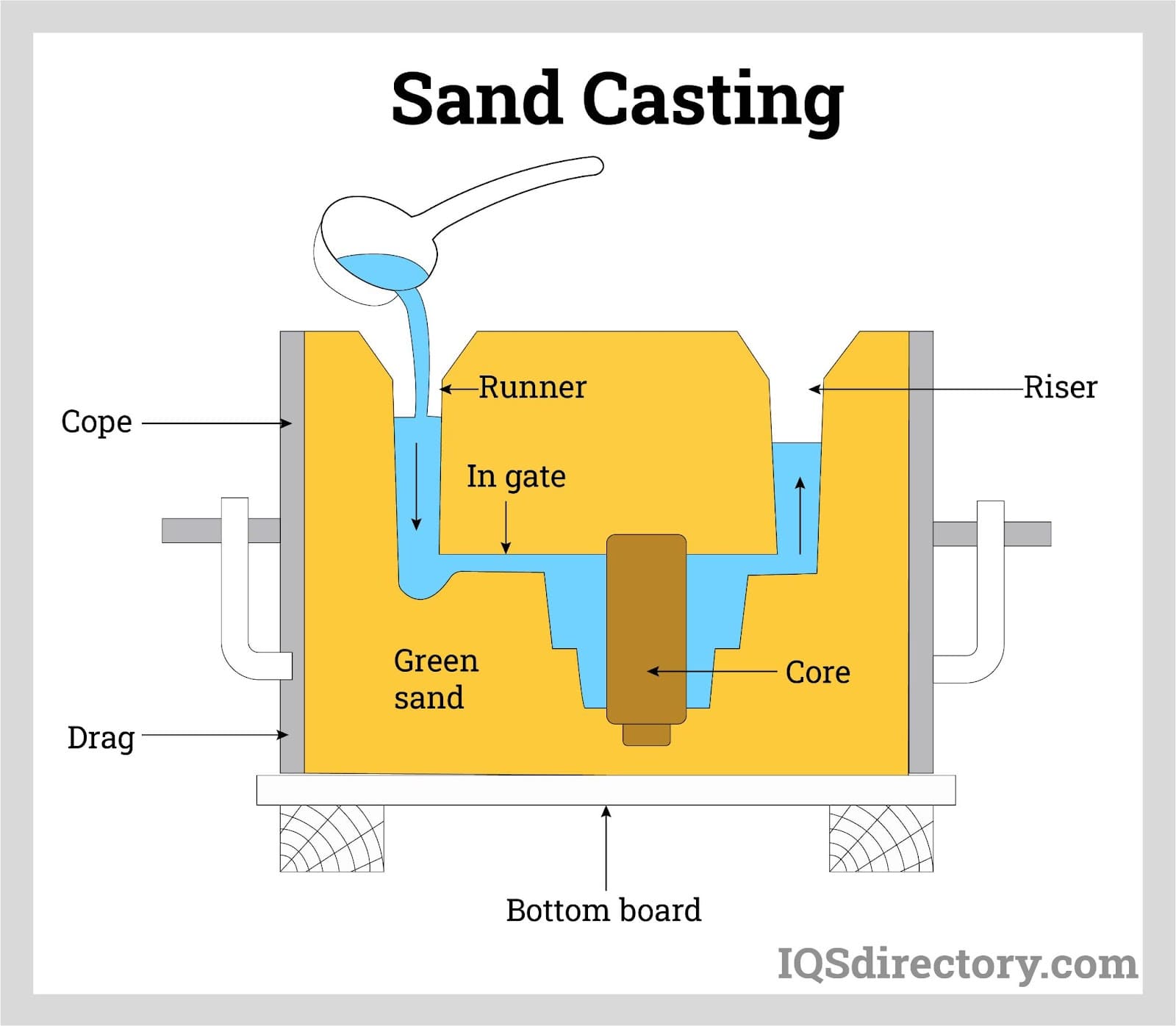
Sand casting is a manufacturing process in which liquid metal is poured into a sand mold, which contains a hollow cavity of the desired shape and then allowed to solidify. Casting is a manufacturing process in which…

Castings & Forgings

Featured Industries